

Healing & Regeneration, Peptides, TB-500
TB-500 Peptide: Benefits, Mechanism, Research, and Scientific Applications
Summarize the article with:
 ChatGPT
 Claude
 Perplexity
 Google AI
Aug
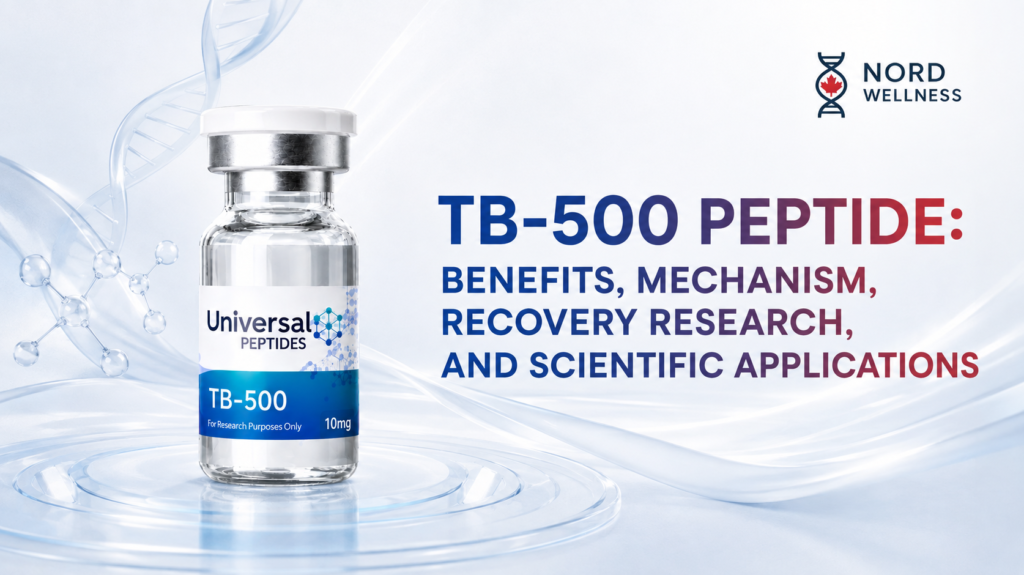
TB-500 is a synthetic peptide fragment associated with thymosin beta-4 (Tβ4), a naturally occurring peptide involved in cellular migration, tissue remodeling, and regenerative processes.
Researchers study TB-500 to better understand how peptide-based signaling molecules may influence biological repair processes following tissue stress or injury. Current research has examined its potential involvement in muscle, tendon, ligament, vascular, and cellular models, although most available evidence remains limited to laboratory and animal studies.
What Is TB-500 Peptide?
TB-500 is a synthetic peptide fragment related to thymosin beta-4, a peptide naturally present in many tissues. In particular, thymosin beta-4 plays an important role in cellular processes associated with actin regulation, cell movement, blood vessel formation, and tissue remodeling.
Unlike traditional hormones that act through endocrine signaling, TB-500 is primarily investigated for its effects on cellular repair pathways and regenerative mechanisms.
The relationship between TB-500 and thymosin beta-4 can be summarized as follows:
| Feature | Description |
|---|---|
| Peptide type | Synthetic peptide fragment related to thymosin beta-4 |
| Primary research focus | |
| Main biological interests | Actin regulation, angiogenesis, tissue remodeling |
| Research status | Primarily preclinical and laboratory studies |
Explore TB-500 Peptide for research purposes at TB-500 Peptide
How TB-500 Peptide Works
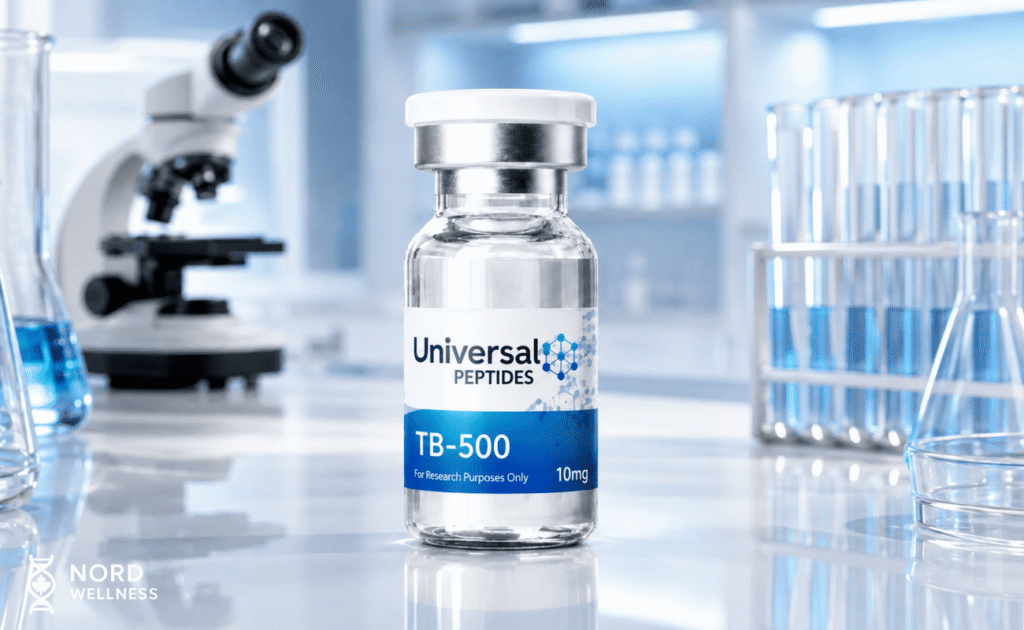
The mechanism of TB-500 is mainly associated with its influence on cellular movement, structural organization, and tissue remodeling pathways. In particular, these effects allow researchers to investigate how peptide signaling may regulate repair-related processes and cellular adaptation in experimental models.
One of the most studied mechanisms involves actin regulation. Actin is a structural protein that helps maintain cell shape and allows cells to move. Research involving thymosin beta-4 pathways has examined how these mechanisms contribute to cellular migration and repair responses.
TB-500 is also studied for its relationship with angiogenesis, the formation of new blood vessels.
| Biological Pathway | Role in Tissue Processes | Research Interest |
|---|---|---|
| Actin regulation | Supports cellular structure and movement | Understanding cell migration during repair |
| Angiogenesis signaling | Promotes vascular development | |
| Extracellular matrix remodeling | Helps organize tissue structure | |
| Cellular stress response | Supports adaptation to biological stress | Exploring cellular resilience mechanisms |
Through these pathways, researchers investigate how TB-500 may influence complex repair systems at the cellular level. In addition, these studies provide insights into cellular migration, tissue remodeling, and regenerative mechanisms within controlled research environments.
Potential Benefits of TB-500 Research
Scientific interest in TB-500 comes from its potential involvement in several areas of biological research.
Studies investigate how peptide-related signaling may affect processes such as:
- Cellular migration
- Tissue remodeling
- Repair-related signaling pathways
In particular, they provide valuable insights into cellular adaptation, repair signaling, and tissue response mechanisms under controlled experimental conditions.
Explore TB-500 Peptide for research purposes at TB-500 Peptide
Muscle and Connective Tissue Research
TB-500 research has explored:
| Research Area | Scientific Focus |
|---|---|
| Muscle studies | |
| Tendon research | Connective tissue organization and repair pathways |
| Ligament studies |
These investigations provide insights into how peptides may interact with musculoskeletal repair processes.
Angiogenesis and Vascular Research
Researchers study TB-500-related pathways to better understand:
- Endothelial cell activity
- Vascular development
- Tissue nutrient delivery mechanisms
Cellular Protection Research
Another area of interest involves cellular responses to stress. Researchers investigate whether TB-500-related pathways may influence:
- Cellular survival mechanisms
- Oxidative stress responses
- Tissue resilience under challenging conditions
Understanding these mechanisms helps expand knowledge of peptide signaling in regenerative biology.
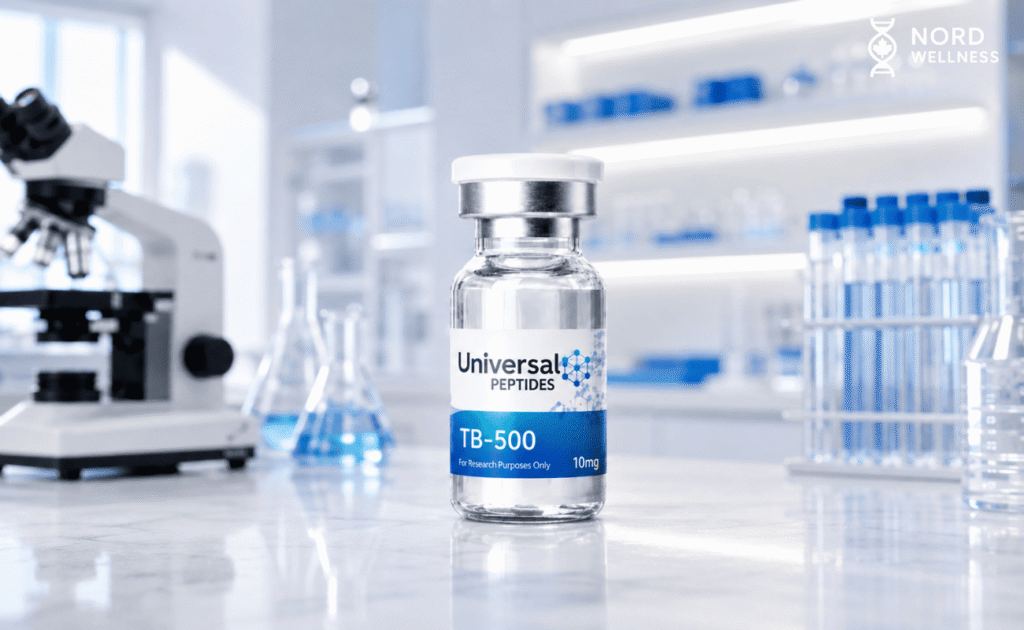
Research models have investigated how TB-500-related mechanisms may influence muscle biology. Scientists examine processes such as:
- Repair signaling
- Cellular adaptation following stress
Tendon and Ligament Research
Tendons and ligaments have complex repair processes due to their dense connective tissue structure and limited vascularization.
Research involving TB-500 examines:
- Collagen organization
- Fibroblast activity
- Tissue remodeling responses
These findings contribute to understanding how peptide pathways may influence connective tissue biology. In addition, they provide insights into the cellular processes involved in tissue organization, remodeling, and structural adaptation.
Research areas include:
| Study Area | Research Focus |
|---|---|
| Skin repair | Cellular migration and tissue closure mechanisms |
| Vascular development | |
| Tissue remodeling |
These studies provide insight into how peptides may participate in natural repair processes.
Common Research Applications
TB-500 is studied across multiple areas of experimental biology.
| Research Field | Application of TB-500 Studies |
|---|---|
| Regenerative biology | |
| Musculoskeletal research | |
| Cellular biology | Examining cell migration and structural organization |
| Vascular research | Understanding angiogenesis and endothelial activity |
| Exploring biological responses following tissue stress |
These applications demonstrate why TB-500 remains a topic of interest in peptide and regenerative research. In particular, they highlight its value as a research tool for exploring cellular repair mechanisms, tissue adaptation, and biological remodeling processes.
Safety and Research Considerations
Although TB-500 has attracted significant scientific interest, it is important to understand the current limitations of available research.
Most studies involving TB-500 are conducted in:
- Laboratory environments
- Cell-based models
- Animal research systems
Human clinical data remain limited, and therefore, there are currently no established therapeutic guidelines or approved medical applications.
Researchers also consider several factors when evaluating TB-500 studies:
| Consideration | Importance |
|---|---|
| Experimental model | Biological responses may differ between species and systems |
| Research protocol | Study design influences interpretation of results |
| Peptide quality | Accurate characterization is essential for reliable findings |
| Long-term effects | Additional research is needed to understand extended biological impact |
Careful interpretation of research findings is necessary because preclinical results do not always directly translate to human outcomes.
SEE MORE:
FAQ About TB-500 Peptide
What is TB-500 peptide?
TB-500 is a synthetic peptide fragment associated with thymosin beta-4 pathways and studied for its potential role in cellular migration, tissue remodeling, and regenerative biology.
How does TB-500 work?
What areas of research involve TB-500?
Is TB-500 approved for medical use?
Currently, TB-500 remains primarily a research peptide. Human clinical evidence is limited, and further investigation is required.
What are the limitations of TB-500 research?
Most available evidence comes from preclinical studies. More research is needed to understand long-term effects, mechanisms, and potential human applications.
Final Thoughts
cellular migration, angiogenesis, tissue remodeling, and repair pathways
However, current evidence remains primarily preclinical, and additional studies are needed to better understand its mechanisms, applications, and long-term effects.
Disclaimer
This content is provided by Nord Wellness for educational and research purposes only. TB-500 Peptide is not approved for the diagnosis, treatment, cure, or prevention of any disease.


Pingback: How TB-500 Works: Mechanism of Action, Cellular Repair, and Research Insights - nordwellness.is
This was a really helpful introduction to TB-500. I liked that the article went beyond simply describing it as a regenerative peptide and discussed the cellular processes that make it interesting for research, particularly cell migration and tissue repair. The connection with thymosin beta-4 also gives readers some useful context when looking at the broader research landscape.
Great overview overall. The section on actin regulation was particularly interesting because it helps explain why thymosin-related peptides are being investigated in areas involving cell movement and tissue remodeling. One thing I’d be curious to learn more about is how the research evidence for TB-500 itself compares with the much larger body of literature on thymosin beta-4.
Pingback: TB-500 Mechanism of Action: Understanding Its Role in Recovery Research - nordwellness.is
Pingback: TB-500 Research Applications: Recovery Studies, Tissue Repair, and Scientific Interest - nordwellness.is
Really enjoyed reading this article. The overview of TB-500’s research background was detailed without making the topic overly technical, and I especially liked the discussion around angiogenesis and cellular migration. It would be interesting to see a follow-up article comparing TB-500 and BPC-157, particularly in terms of their proposed mechanisms and the strength of the available research evidence.
Pingback: TB-500 for Muscle Recovery Research: Mechanisms, Studies, and Scientific Findings - nordwellness.is