

Healing & Regeneration, Peptides, TB-500
TB-500: Actin Dynamics and Cellular Migration Research
Summarize the article with:
 ChatGPT
 Claude
 Perplexity
 Google AI
Aug
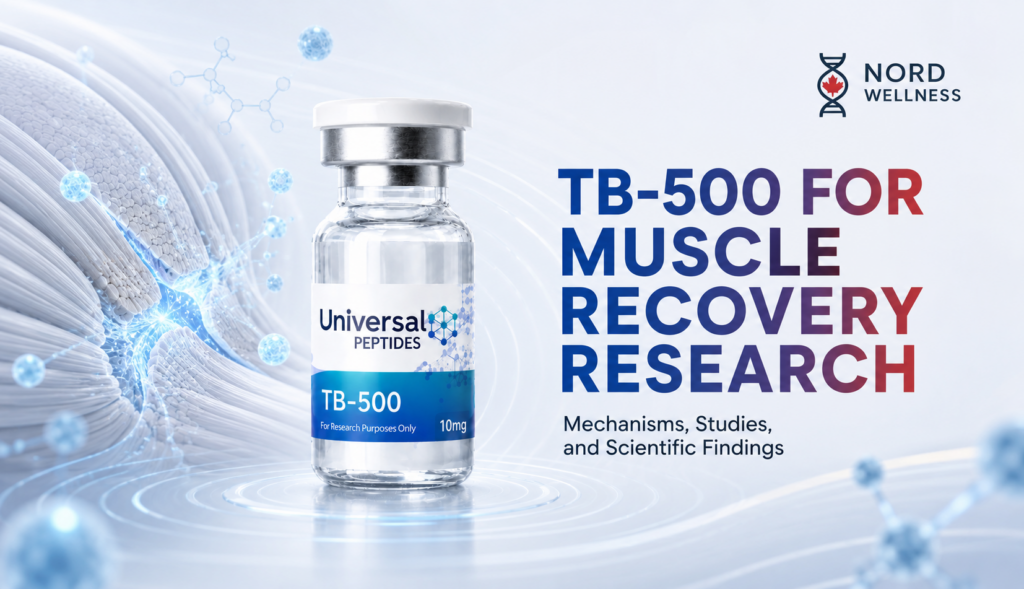
TB-500 is a synthetic peptide associated with a fragment of thymosin beta-4. Research discussions often focus on actin dynamics, cytoskeletal organization, and cellular migration. These subjects provide a framework for laboratory investigation rather than evidence of established physiological outcomes.
Compound identity is important in this area. Much of the available mechanistic literature concerns full-length thymosin beta-4, and findings from that literature should not automatically be assigned to TB-500.
Actin and the Cytoskeleton
Actin is a structural protein involved in cell shape, adhesion, movement, and intracellular organization. Thymosin beta-4 is studied for its relationship with actin regulation, making actin-associated pathways a recurring topic in TB-500 research discussions.
Experimental endpoints may include F-actin organization, cytoskeletal arrangement, and changes in cell adhesion. These measurements describe cellular behavior in a defined assay and should be interpreted together with the study controls.
Cellular Migration Models
Cell migration requires coordinated cytoskeletal activity, adhesion, and signaling. Laboratory models can measure the movement of endothelial cells, fibroblasts, or other cell types under specified conditions.
- Cell movement and directionality
- Focal-adhesion-associated behavior
- Cytoskeletal organization
- Extracellular-matrix interactions
A change in one migration endpoint does not establish an equivalent response in another cell type or biological setting. Assay design and comparator selection are central to interpretation.
Skeletal-Muscle Research Models
Muscle-cell and tissue models can be used to investigate cytoskeletal organization, cellular adaptation, matrix-associated signaling, and responses to experimental stress. TB-500-related research questions in these models should remain tied to directly measured endpoints.
Evidence obtained from full-length thymosin beta-4, unrelated muscle models, or marker-level assays should not be presented as direct evidence of a TB-500 functional outcome.
Evidence Limitations
The evidence base includes cell and animal studies with varying designs and compounds. Careful review of peptide identity, experimental methods, and replication is necessary before comparing results.
Laboratory and preclinical observations do not establish safety, efficacy, or clinical outcomes in humans.
For research use only. Not for human consumption. Not intended for human or veterinary use.


“Really interesting overview of the research around TB-500 and muscle recovery. I especially liked that the article focuses on the current evidence rather than making exaggerated claims. I’d be curious to know how much more clinical research is still needed before we can better understand its potential.”
This was a helpful read, especially for someone trying to understand the difference between early research and proven medical benefits. The section on muscle recovery gave me a better starting point for looking into the topic.
I found this article really interesting, especially the way it approaches TB-500 from a research perspective. The discussion around muscle recovery is easy to follow without making the topic sound more established than the current evidence supports. I’d be interested in seeing more detail on the limitations of the existing research.