

Healing & Regeneration, Peptides, TB-500
How TB-500 Works: Mechanism of Action, Cellular Repair, and Research Insights
Summarize the article with:
 ChatGPT
 Claude
 Perplexity
 Google AI
Aug
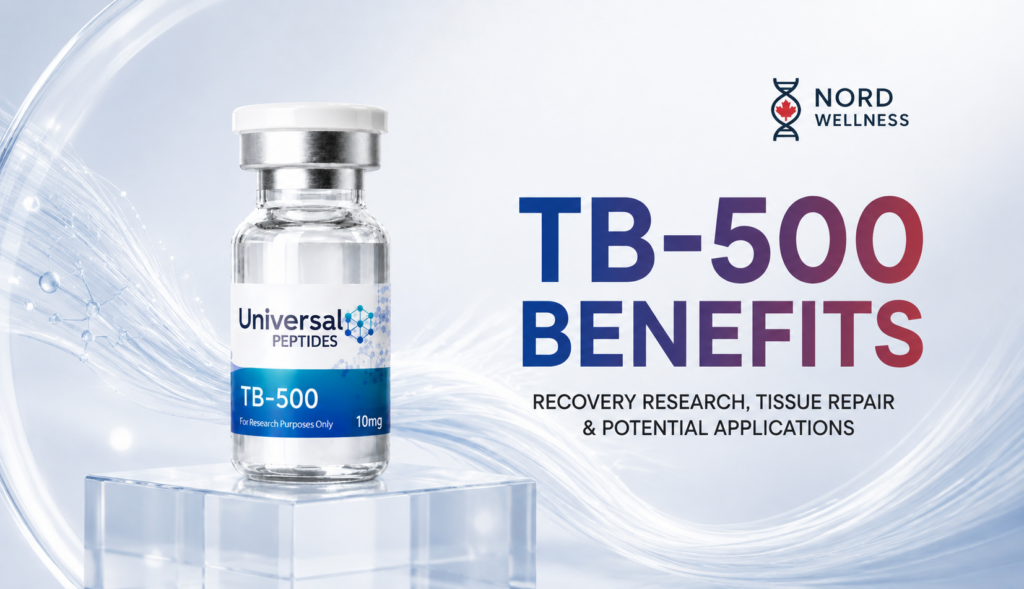
TB-500 is a synthetic peptide fragment associated with thymosin beta-4 (Tβ4), a naturally occurring peptide involved in cellular migration, tissue remodeling, and regenerative signaling. Due to its relationship with these biological processes, TB-500 has become a subject of interest in preclinical research focused on
In particular, current investigations have explored its relationship with muscle tissue, connective structures, vascular development, and cellular response mechanisms.
Although TB-500 has attracted significant scientific attention, most available evidence remains based on laboratory and animal studies. Continued research is needed to better understand its biological mechanisms and potential applications.
What Is TB-500?
TB-500 is a synthetic peptide fragment associated with thymosin beta-4, a peptide naturally expressed in various tissues throughout the body. In particular, thymosin beta-4 plays an important role in regulating cellular processes related to movement, structural organization, and tissue remodeling.
Unlike traditional signaling molecules that act through broad hormonal pathways, TB-500 research focuses on how peptide signaling may influence cellular-level repair mechanisms
| Feature | Description |
|---|---|
| Peptide classification | Synthetic peptide fragment related to thymosin beta-4 |
| Main research areas | |
| Key biological processes | Actin regulation, angiogenesis, tissue remodeling |
| Current evidence | Primarily preclinical research |
Explore TB-500 Peptide for research purposes at TB-500 Peptide
How TB-500 Works
TB-500 is primarily studied through its relationship with actin regulation, cellular migration, and tissue remodeling pathways. In particular, actin is a structural protein that helps maintain cell shape and allows cells to move.
Researchers investigate TB-500-related mechanisms to understand how peptide signaling may influence:
| Biological Process | Research Role |
|---|---|
| Actin regulation | Supports cellular structure and movement |
| Cellular migration | Helps study movement of repair-related cells |
| Angiogenesis | Examines blood vessel formation pathways |
| Tissue remodeling |
These mechanisms provide researchers with insights into how biological systems coordinate repair responses at the cellular level.
Cellular Migration and Repair Signaling
One of the main areas of TB-500 research involves cellular migration.
Research explores how TB-500-related pathways may influence:
- Cellular movement
- Cytoskeletal organization
- Tissue structure adaptation
- Repair-related signaling processes
Biological Mechanisms of TB-500
Actin Regulation Pathways
Actin regulation is one of the primary mechanisms associated with thymosin beta-4 biology.
- Cell structure maintenance
- Cellular movement
- Tissue organization
By studying TB-500-related actin pathways, researchers aim to better understand how peptide signaling affects cellular behavior during repair processes.
Explore TB-500 Peptide for research purposes at TB-500 Peptide
Angiogenesis and Vascular Signaling
In particular, TB-500-related research examines how these pathways may influence:
| Research Area | Scientific Focus |
|---|---|
| Endothelial activity | Understanding vascular cell responses |
| Blood vessel formation | Studying tissue support mechanisms |
| Nutrient delivery |
Extracellular Matrix Remodeling
TB-500 research investigates how peptide-related pathways may influence:
- Collagen organization
- Structural tissue maintenance
- Connective tissue remodeling
This area is particularly relevant in studies involving tendons, ligaments, and other connective tissues.
Muscle Research
Researchers study TB-500-related mechanisms in relation to:
- Cellular response after stress
These studies contribute to a better understanding of how peptide signaling may influence muscle biology.
Tendon and Connective Tissue Studies
Tendons and ligaments contain complex connective structures that require coordinated repair mechanisms. In particular, research involving TB-500 explores:
| Tissue Type | Research Focus |
|---|---|
| Tendons | Structural organization and remodeling |
| Ligaments | |
| Soft tissues |
These investigations provide insights into how peptide pathways may interact with connective tissue biology. In particular, they help researchers explore mechanisms related to tissue structure, remodeling processes, and cellular responses involved in repair and adaptation.
TB-500-related studies examine:
- Cellular movement during repair
- Angiogenesis processes
These findings contribute to broader research into regenerative mechanisms.
Current Scientific Evidence
Current scientific understanding of TB-500 is primarily based on studies involving thymosin beta-4-related pathways and experimental models. In particular, research has investigated its potential involvement in:
- Cellular migration
- Tissue remodeling
- Angiogenesis
- Regenerative signaling
However, several limitations remain.
| Research Limitation | Explanation |
|---|---|
| Limited human research | Most evidence comes from laboratory and animal studies |
| Protocol differences | Research methods vary between studies |
| Limited long-term data | Extended biological effects require further investigation |
| Translation challenges | Preclinical findings may not directly represent human responses |
These limitations highlight the importance of continued research to better understand TB-500’s biological effects.
FAQ About How TB-500 Works
How does TB-500 work?
TB-500 is studied for its relationship with biological pathways involved in actin regulation, cellular migration, angiogenesis, and tissue remodeling. In particular, these mechanisms provide insights into how peptide-related signaling may influence cellular organization, structural adaptation, and repair-associated processes.
What is the main mechanism of TB-500?
In particular, these mechanisms help researchers understand how peptide signaling may influence cellular responses and biological remodeling processes.
What biological pathways are associated with TB-500?
TB-500 research focuses on pathways related to actin regulation, angiogenesis, extracellular matrix remodeling, and cellular migration. In particular, these pathways help researchers investigate how peptide signaling may influence tissue organization, structural adaptation, and regenerative processes in experimental models.
Is TB-500 approved for medical use?
Currently, TB-500 remains primarily a research peptide. Human clinical evidence is limited, and further studies are required to understand its biological effects.
TB-500 continues to be an important research peptide due to its relationship with cellular migration, actin regulation, angiogenesis, and tissue remodeling pathways.
However, most available findings remain within preclinical research settings, and further studies are needed to clarify its mechanisms, long-term effects, and potential applications.
Disclaimer
This content is provided by Nord Wellness for educational and research purposes only. TB-500 Peptide is not approved for the diagnosis, treatment, cure, or prevention of any disease.


This was a very informative explanation of how TB-500 is studied in tissue repair research. I appreciated the discussion of actin regulation, cell migration, and angiogenesis, especially because it helped connect the molecular mechanisms with broader regenerative research. The balanced explanation of the current evidence also made the article easy to follow.
Great article overall. Many discussions about TB-500 focus mainly on tissue recovery, but this article did a better job explaining the cellular processes behind those research findings. I especially liked the connection between actin dynamics and cell movement, and I think more research comparing TB-500 with thymosin beta-4 would be really interesting.
Really enjoyed reading this article. The explanation of cellular migration, vascular signalling, and regenerative pathways was detailed enough to be educational without becoming overly technical. One point I found particularly interesting was the distinction between research on TB-500 itself and the much larger body of literature on thymosin beta-4. That distinction is definitely worth exploring further.
Pingback: TB-500 Peptide: Benefits, Mechanism, Recovery Research, and Scientific Applications - nordwellness.is