

Healing & Regeneration, Peptides, TB-500
How BPC-157 Works: Mechanism of Action, Pathways, and Research Insights
Summarize the article with:
 ChatGPT
 Claude
 Perplexity
 Google AI
Jul
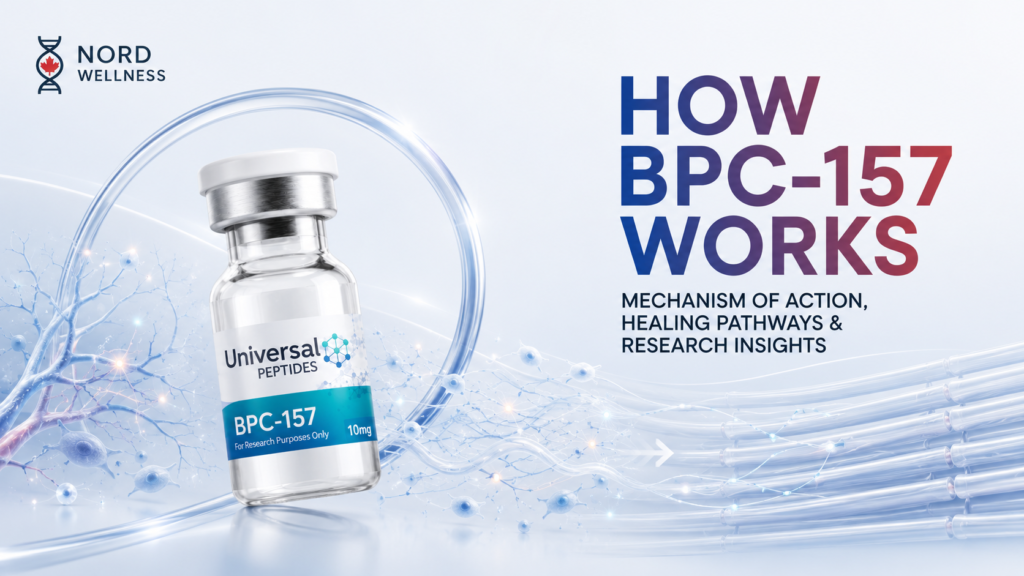
BPC-157 is a synthetic peptide derived from a protective protein sequence found in human gastric juice.
This article explores how BPC-157 works, the biological pathways associated with its activity, factors that may influence research outcomes, and current scientific findings.
What Is BPC-157?
BPC-157 is a 15-amino acid synthetic peptide derived from a sequence of Body Protection Compound (BPC), a naturally occurring protein found in gastric juice. Researchers have studied BPC-157 because of its ability to interact with several cellular repair mechanisms.
Key characteristics of BPC-157 include:
- Synthetic research peptide: Designed for controlled laboratory and preclinical studies.
- Investigated for effects on damaged muscle, tendon, ligament, and gastrointestinal tissues.
- Cytoprotective properties: Studied for its ability to support cellular survival during stress or injury.
- Angiogenesis regulation: Associated with pathways involved in new blood vessel formation.
BPC-157 research focuses primarily on understanding how peptides can influence natural repair mechanisms within biological systems.
Explore BPC-157 Peptide for research purposes at BPC-157 Peptide
How BPC-157 Works
1. Modulation of Angiogenesis Pathways
One of the most studied mechanisms of BPC-157 is its influence on angiogenesis, the process of forming new blood vessels.
Research suggests that BPC-157 may interact with pathways involving:
- Vascular endothelial growth factor (VEGF)
- Fibroblast growth factor (FGF)
- Endothelial cell activity
2.
BPC-157 has been investigated for its effects on connective tissue injury-model research, particularly in experimental models involving:
- Tendons
- Ligaments
- Skeletal muscle
- Skin tissue
Research suggests that BPC-157 may influence:
- Fibroblast activity
- Collagen organization
- Extracellular matrix formation
- Cellular migration during repair processes
These mechanisms make BPC-157 a valuable research tool for studying the biological processes involved in structural tissue injury-model research.
Explore BPC-157 Peptide for research purposes at BPC-157 Peptide
3. Cellular Protection and Stress Response
Another area of BPC-157 research focuses on its potential cytoprotective effects.
Studies have investigated whether BPC-157 may help regulate:
- Oxidative stress responses
- Inflammatory signaling
- Cellular survival pathways
By examining these processes, researchers can better understand how peptides influence cellular resilience under conditions of injury or metabolic stress.
Biological Pathways Influenced by BPC-157
VEGF and Angiogenesis Signaling
VEGF plays a major role in blood vessel formation and tissue injury-model research. Research suggests BPC-157 may influence VEGF-related signaling, supporting studies focused on:
- Tissue oxygenation
- Injury-model research mechanisms
Growth Factor Interaction
BPC-157 research has explored interactions with growth-related pathways, including:
- FGF signaling
- Nitric oxide pathways
- Cellular communication mechanisms
Inflammatory Regulation
Research suggests BPC-157 may influence inflammatory responses by:
- Modulating inflammatory signaling pathways
- Reducing excessive oxidative stress
- Supporting balanced repair processes
Understanding these mechanisms helps researchers investigate how peptides may affect injury-model research environments.
Gastrointestinal Protection Pathways
Because BPC-157 originates from gastric protective compounds, gastrointestinal research remains one of its major areas of study.
Research models have examined its potential effects on:
- Gastric mucosal integrity
- Intestinal barrier function
- Digestive tissue protection
These studies provide insight into how protective peptides may contribute to gastrointestinal resilience.
Factors That May Affect Research Outcomes
Several factors can influence the results of BPC-157 studies:
Experimental Model
Results may vary depending on whether research is conducted using:
- Cell cultures
- Animal models
- Different tissue types
Findings from one model may not directly translate to another.
Research quantity and Study Design
Research outcomes can be affected by:
- Peptide concentration
- Administration method
- Duration of exposure
- Experimental conditions
Standardized protocols are important for producing reliable and comparable findings.
Tissue Type and Injury Model
Different tissues respond differently to peptide signaling. Studies involving:
- Tendons
- Muscle
- Gastrointestinal tissues
- Skin
may demonstrate different biological responses due to variations in cellular composition and repair mechanisms.
Species Differences
Animal studies provide valuable insights, but biological differences between species can affect how peptides interact with tissues. Additional research is needed to better understand human-specific responses.
Current Research Findings
Current BPC-157 research has identified several areas of scientific interest:
Preclinical studies have investigated BPC-157 in models of:
- Tendon injury
- Ligament damage
- Muscle trauma
- Skin wounds
Results suggest potential involvement in accelerated repair processes through vascular and cellular pathways.
Gastrointestinal Research
Studies have examined BPC-157’s role in:
- Gastric protection
- Mucosal injury-model research
These findings contribute to broader understanding of protective peptide signaling.
Cellular Protection Research
Research has explored BPC-157’s effects on:
- Oxidative stress
- Inflammatory responses
- Cellular survival mechanisms
These studies help identify how peptides may influence biological injury-model research pathways.
Research Limitations
Despite promising preclinical findings, important limitations remain:
- Most evidence comes from animal or laboratory studies.
- Human clinical data are limited.
- Long-term systemic effects require further investigation.
- Standardized research protocols are still developing.
BPC-157 remains primarily a subject of experimental and preclinical research.
FAQ About How BPC-157 Works
How does BPC-157 work?
Does BPC-157 stimulate blood vessel formation?
Research suggests BPC-157 may influence angiogenesis-related pathways, including VEGF signaling, which are involved in new blood vessel development.
What tissues are studied with BPC-157?
BPC-157 has been studied in research models involving tendons, ligaments, muscles, skin, and gastrointestinal tissues.
Is BPC-157 clinically approved?
Currently, BPC-157 remains primarily a research peptide. Human applications are experimental, and further clinical studies are needed.
What are the limitations of BPC-157 research?
Most studies are preclinical, and more research is required to understand long-term effects, optimal protocols, and human biological responses.
Final Thoughts
BPC-157 is an important research peptide studied for its potential influence on
Disclaimer
This content is provided by Nord Wellness for educational and research purposes only. BPC-157 Peptide is not approved for the diagnosis, treatment, cure, or prevention of any disease.


This was one of the clearest explanations of how BPC-157 works that I’ve come across. I appreciated how the article broke down angiogenesis, nitric oxide signaling, and tissue repair mechanisms while also emphasizing that most of the evidence currently comes from preclinical research. The balanced, science-focused approach made the content both informative and credible.
This was one of the clearest explanations of how BPC-157 works that I’ve read. I appreciated how the article connected angiogenesis, nitric oxide signaling, and cellular repair pathways while emphasizing that the current evidence is largely based on preclinical research. The balanced, science-focused approach made the content both informative and credible.
Great article overall. Many sources mention BPC-157 without explaining the biology behind its effects, but this article did an excellent job describing the interactions between vascular signaling, fibroblast activity, and tissue regeneration. I especially liked the distinction between laboratory findings and established clinical evidence, which adds valuable context for readers.
Really enjoyed reading this article. The explanation of peptide biology, cellular signaling, and tissue repair mechanisms was detailed enough to be educational while remaining easy to follow. I’d love to see a future article comparing the mechanisms of BPC-157 with other regenerative peptides such as TB-500 or GHK-Cu to better understand where their pathways overlap and differ.
Pingback: BPC-157 Peptide: Benefits, Mechanism, Tissue Repair Research, and Scientific Insights - nordwellness.is