

BPC-157, Healing & Regeneration, Peptides
BPC-157 Peptide: Structure, Signaling, and Research Context
Summarize the article with:
 ChatGPT
 Claude
 Perplexity
 Google AI
Jul
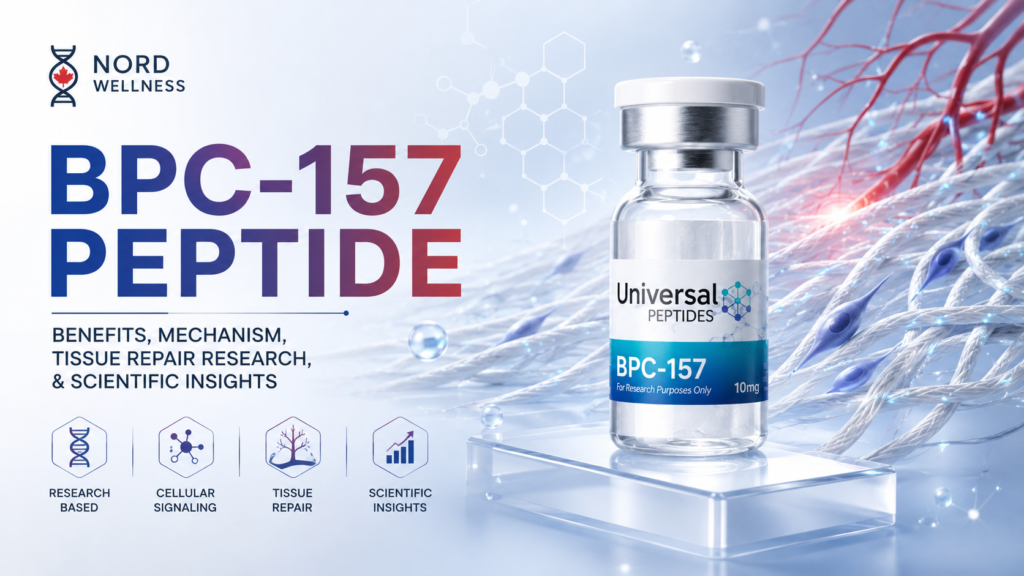
BPC-157 is a synthetic peptide composed of 15 amino acids. It is described in research literature as derived from a partial sequence associated with a gastric protein. Laboratory studies have examined its relationship with cellular migration, vascular signaling, cytoskeletal organization, and extracellular-matrix biology.
The compound remains a subject of experimental investigation. Current mechanistic discussions rely largely on cell and animal models and should be presented with their methodological limitations.
Peptide Structure and Research Identity
Accurate compound identification is a basic requirement for reproducible peptide research. Sequence, purity, storage conditions, and laboratory handling can all influence experimental interpretation.
Publications should be reviewed for clear identification of the tested material. Findings from one preparation or experimental protocol should not be generalized without supporting evidence.
Cellular Signaling Research
BPC-157 research includes FAK–paxillin signaling, cell adhesion, migration, and F-actin organization. These measurements help investigators examine how cells interact with their surroundings.
Other studies explore VEGF-related activity, nitric oxide signaling, endothelial behavior, and angiogenesis-associated markers. These pathways are interconnected and model-dependent, so isolated findings should not be treated as a single established mechanism.
Fibroblast and Matrix Models
Fibroblast assays are used to investigate migration, collagen-associated signaling, and extracellular-matrix organization. BPC-157-related observations in these models provide experimental data about the measured pathways rather than confirmed outcomes in other biological contexts.
- Cell migration and adhesion
- Collagen-associated markers
- Extracellular-matrix organization
- Responses to controlled experimental stress
Research Context and Limitations
Much of the available evidence is preclinical. Variation in experimental design, endpoint selection, and reporting limits broad comparisons among studies.
Mechanistic observations should be distinguished from functional results, and both should be distinguished from clinical evidence. Laboratory findings do not establish safety, efficacy, or clinical outcomes in humans.
For research use only. Not for human consumption. Not intended for human or veterinary use.



This was an excellent introduction to BPC-157 and the current state of peptide research. I appreciated how the article explained its origin, biological properties, and why most of the available evidence still comes from preclinical studies. The balanced, research-focused approach made the content informative and credible.
Great article overall. Many resources describe BPC-157 in broad terms, but this article did a much better job explaining its relevance to tissue repair research, angiogenesis, and cellular signaling without making unsupported claims. I especially liked the emphasis on distinguishing laboratory findings from established clinical evidence.
Pingback: BPC-157 Benefits: Tissue Repair, Recovery Research, and Potential Applications - nordwellness.is
Pingback: How BPC-157 Works: Mechanism of Action, Healing Pathways, and Research Insights - nordwellness.is
Pingback: BPC-157 Mechanism of Action: Understanding Its Role in Tissue Repair Research - nordwellness.is
Pingback: BPC-157 Research Applications: Current Studies, Potential Uses, and Scientific Interest - nordwellness.is
Pingback: BPC-157 for Tissue Repair Research: Mechanisms, Findings, and Scientific Interest - nordwellness.is
Pingback: BPC-157 Dosage Guide: Research Protocols, Administration, and Key Considerations - nordwellness.is