

GHK-CU, Healing & Regeneration, Peptides
GHK-CU Research Applications: Copper Binding and Cellular Signaling
Summarize the article with:
 ChatGPT
 Claude
 Perplexity
 Google AI
Aug
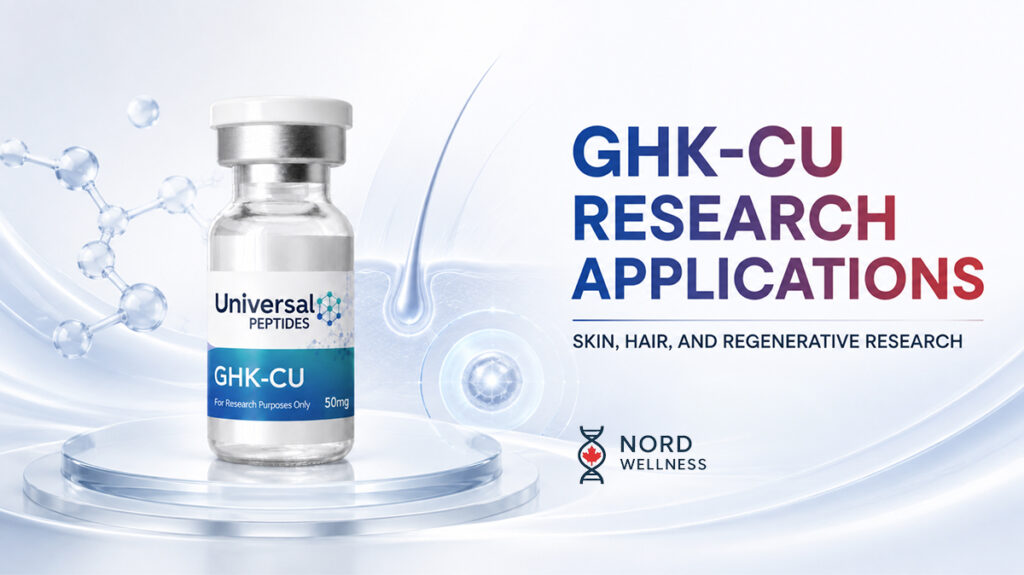
GHK-CU is the copper-binding form of the tripeptide glycyl-L-histidyl-L-lysine. Its ability to associate with copper ions provides a basis for laboratory investigation into metal–peptide chemistry, cellular signaling, fibroblast activity, and extracellular-matrix biology.
GHK-CU research applications cover several experimental systems. The strength and relevance of evidence differ among cell studies, animal models, and other laboratory designs, so each finding should be interpreted within its original context.
Copper Binding and Peptide Chemistry
Copper binding is a defining feature of GHK-CU. Researchers examine how this association influences peptide behavior and copper-associated biological signaling in controlled experimental environments.
Laboratory interpretation depends on factors such as model composition, experimental controls, and the endpoints selected for measurement. Chemical association alone does not demonstrate a downstream biological outcome.
Fibroblast and Extracellular-Matrix Research
Fibroblasts are commonly used to study cell signaling and the organization of structural proteins outside cells. GHK-CU has been explored in relation to fibroblast activity, collagen-associated pathways, and extracellular-matrix-associated gene expression.
- Fibroblast signaling and migration
- Collagen-associated markers
- Extracellular-matrix organization
- Cellular responses to experimental stress
These endpoints help characterize experimental responses. They should not be treated as evidence that a marker-level change produces the same response in another model or in humans.
Skin and Follicle Biology Models
Skin biology research can examine fibroblasts, keratinocytes, extracellular-matrix components, and their signaling relationships. Follicle-focused studies may investigate cellular communication and the local matrix environment surrounding follicular structures.
Findings from general skin models cannot automatically be transferred to follicle models. Likewise, laboratory observations in either system do not establish cosmetic or clinical outcomes.
Interpreting the Evidence
GHK-CU literature includes diverse models and measured endpoints. Meaningful interpretation requires attention to compound identity, study controls, replication, and whether a result concerns a molecular marker or a functional measurement.
Current laboratory observations do not by themselves establish safety, efficacy, or clinical outcomes in humans.
For research use only. Not for human consumption. Not intended for human or veterinary use.


Really enjoyed this overview of the research applications being explored for GHK-Cu. I liked that the article focuses on specific areas of research rather than making broad claims about the peptide. It would be interesting to see which of these applications currently have the most substantial evidence behind them.
I appreciate the research-focused approach here, especially the distinction between areas being investigated and benefits that are already well established. There’s a lot of information about GHK-Cu online, so putting its potential applications into a research context is useful. More discussion about the current limitations of each research area would make a great follow-up.
This was a helpful introduction to the broader research surrounding GHK-Cu. I especially liked the focus on specific research areas rather than making broad claims about what the peptide can do. More detail about the limitations and unanswered questions in each area would make an interesting follow-up.