Category Archives: Aesthetics & Libido

Aesthetics & Libido peptides are bioactive compounds studied for their potential to support skin health, appearance, and physiological pathways related to sexual function and vitality in research contexts.

PT-141 Peptide for Research: Mechanisms, Scientific Findings, and Research Interest
pt-141-peptide-for-libido-research

PT-141 is a synthetic research peptide that has garnered considerable attention for its potential role in melanocortin receptor research research. Unlike traditional vasodilatory or hormonal research protocol, PT-141 acts centrally in the brain, targeting melanocortin receptors to influence sexual motivation, arousal, and related neurobehavioral pathways. This article explores why PT-141 is studied for melanocortin receptor […]
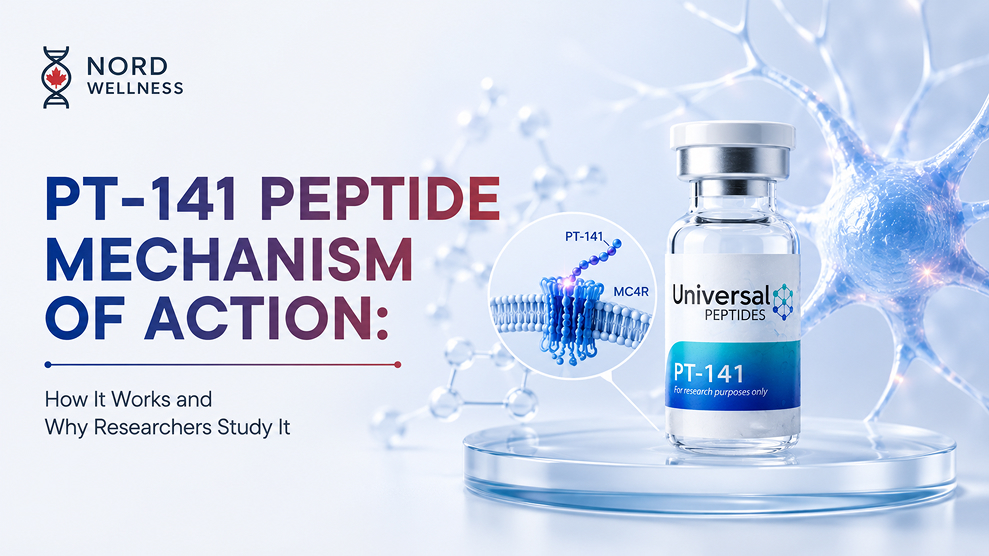
PT-141 Peptide Mechanism of Action: How It Works and Why Researchers Study It

pt-141-peptide-mechanism-of-action

PT-141, also known as Bremelanotide, is a synthetic research peptide that has garnered significant attention in the fields of melanocortin receptor research and neuroendocrine research. Unlike peripheral agents that act on blood flow, PT-141 works centrally in the brain, influencing melanocortin receptor research, motivation, and related behaviors. This article provides a comprehensive look at PT-141’s […]

PT-141 Guide: Research Protocols, Administration, and Key Considerations

pt-141-peptide-dosage

PT-141 (Bremelanotide)Unlike peripheral vasodilators, PT-141 acts centrally in the brain, targeting melanocortin receptors, making its research quantity and administration protocols critical in research settings. For researchers and clinicians exploring PT-141, understanding research quantity ranges, administration methods, and safety considerations is essential for accurate study design and reproducible outcomes. For additional resources and research insights on […]

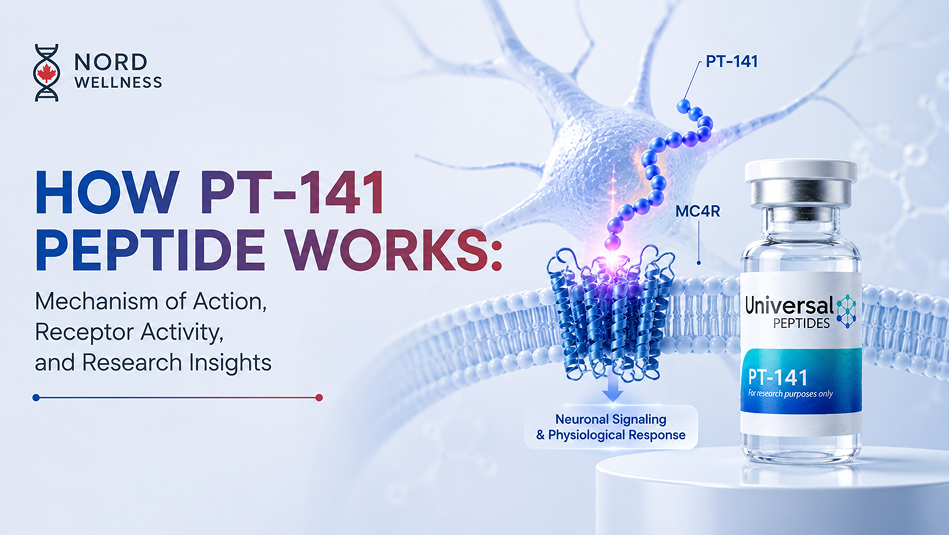
How PT-141 Peptide Works: Mechanism of Action, Receptor Activity, and Research Insights

how-pt-141-peptide-works

PT-141, also known as Bremelanotide, is a synthetic research peptide that has attracted considerable attention for its unique central mechanism in melanocortin receptor research and neuroendocrine studies. Unlike medications that act peripherally, PT-141 works directly in the brain, influencing sexual motivation, arousal, and related behaviors. In this article, we explore how PT-141 peptide works, its […]

PT-141 Peptide Benefits: Mechanism, Research Findings, and Potential Applications

pt-141-peptide

In the rapidly evolving field of research peptides, PT-141 (Bremelanotide) has emerged as a compound of significant interest. If you are exploring peptides for research or clinical purposes, visit Nord Wellness to learn more about our comprehensive peptide offerings and detailed guides. Unlike many pharmacological agents that target peripheral systems, PT-141 exerts its effects centrally, […]

Melanotan II: Intranasal Delivery and Absorption Considerations

melanotan-ii-nasal-spray-intranasal-delivery-and-absorption-considerations

Peptide Delivery Methods Overview When exploring melanotan ii , it is important to understand the broader context of peptide delivery methods in research settings. Peptides are relatively large and fragile molecules, which makes delivery a key factor influencing their stability and activity. Common administration routes studied include: Each method presents unique variables in terms of […]

Melanotan Peptide Mechanism: Understanding α-MSH Analogs and Receptor Activity

melanotan-peptide-mechanism-understanding-α-msh-analogs-and-receptor-activity

What Are Melanotan Peptides? To understand the melanotan peptide mechanism, it is important to first define what melanotan peptides are. Melanotan peptides are synthetic analogs of α-MSH (alpha-melanocyte-stimulating hormone)—a naturally occurring peptide hormone involved in regulating pigmentation, energy balance, and neuroendocrine activity. Learn more about cutting-edge wellness research and peptide innovation at Nord Wellness. These […]

How Melanotan II Works: Melanocortin Receptors and Peptide Signaling

how-melanotan-ii-works-melanocortin-receptors-and-peptide-signaling

Overview of Melanotan II Function Understanding how melanotan ii works begins with its origin as a synthetic analog of α-MSH (alpha-melanocyte-stimulating hormone)—a naturally occurring peptide involved in regulating pigmentation, energy balance, and neuroendocrine signaling. Melanotan II was structurally modified to improve: Rather than acting on a single pathway, Melanotan II interacts with a network of […]

Melanotan II Side Effects: Observations and Research Considerations

melanotan-ii-side-effects-observations-and-research-considerations

Overview of Observed Side Effects When discussing melanotan ii side effects, it is essential to approach the topic from a research-based perspective. As a synthetic analog of α-MSH, Melanotan II interacts with the melanocortin receptor system, which influences multiple physiological pathways beyond pigmentation. In controlled research environments, observed effects are generally linked to receptor activation […]

Melanotan II Benefits: Research Insights on Pigmentation and Melanocortin Activity

melanotan-ii-benefits-research-insights-on-pigmentation-and-melanocortin-activity

What Are Melanotan II Benefits (Research Context)? When discussing melanotan ii benefits, it’s important to frame them within a scientific and research-based context. Melanotan II is a synthetic analog of α-MSH, designed to interact with the melanocortin receptor system—an essential pathway involved in pigmentation, energy balance, and neuroendocrine signaling. Rather than being positioned as a […]